
BHP has warned it will consider pausing lower-margin parts of its Queensland coal business if low prices persist amid the ongoing negative impacts of ‘extreme royalty rates’.
That comes against a backdrop of its long-standing position that it will not be investing in any further growth across the BHP Mitsubishi Alliance operations as a result of the royalty regime introduced under the previous State Government in 2022.
BMA-owned mines include Goonyella Riverside, Broadmeadow, Peak Downs, Saraji and Caval Ridge in the Bowen Basin region.
The company’s full year financial results show a $2 billion ($US1.3 billion) drop in underlying EBITDA across the BMA steelmaking coal operations in Queensland to about $920 million ($US0.6 billion).
This compared to $1.7 billion ($US1.1 billion) in royalties and other payments to government.
BHP chief executive officer Mike Henry told journalists that the recent changes to the Queensland royalty regime had seriously eroded the benefit of any upswing in coal prices from a BMA perspective.
“And so, in the face of tougher times like we see currently, there’s less ability or willingness on the part of the business to see through those tough times and perhaps carrying some negative cash flows, we have to act even more expediently to shut in loss-making production, because we don’t get the benefit on the other side of the equation when prices rise,” he said.
“Just as a figure for you, last year, the effective tax rate for the BMA business in Queensland was over 67 per cent, taking into account the higher royalty burden that we face there now.
“So this is a pretty significant impact on the business for sure.”
The average realised price for the group’s steelmaking coal dropped 27 per cent from $US266.06/t in the previous year to $US193.82/t in FY25.
In addition to the price slump, BMA’s EBITDA was impacted by its divestment of the Blackwater and Daunia operations.
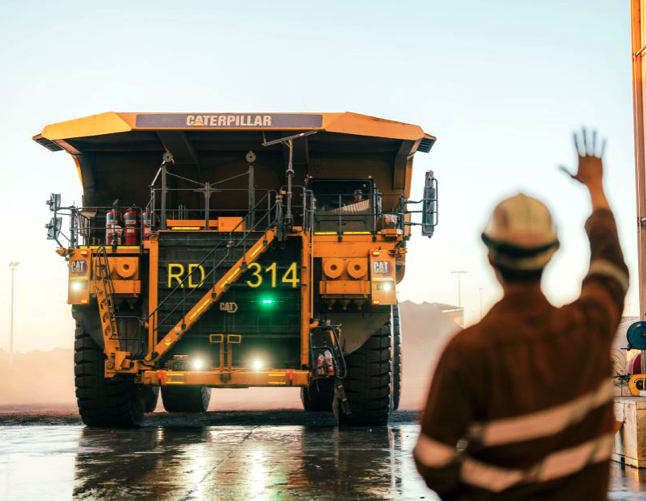
‘These more than offset strong operational performance across the open cut mines, underpinned by improved truck productivity and our focused effort to rebuild raw coal inventory, which helped stabilise operations and lift production across the asset by 5 per cent,’ the company stated.
Looking into the future, the company expects that higher quality steelmaking coals, such as those produced by BMA assets in Queensland, will be valued for their role in reducing the greenhouse gas emission intensity of blast furnaces.
In addition, robust hard coking coal imports from developing countries such as India, would lead to growing and resilient demand for decades to come.
‘With the major seaborne supply region of Queensland not being conducive to long-life capital investment owing to the current royalty regime, the scarcity value of higher quality steelmaking coals may also increase over time,’ the company stated.
Companies now pay 20 per cent on the dollar in Queensland royalties when coal prices exceed $175 per tonne, 30 per cent on the dollar when prices climb beyond $225 per tonne and 40 per cent when they exceed $300.